In the landscape of domestic felines, the Ragdoll stands as a masterclass in gentleness, a breed that successfully challenges the traditional notion of the aloof, independent cat. Often referred to as "puppy-cats" due to their social devotion and willingness to be handled, these large, blue-eyed companions have carved out a unique niche in the hearts of families worldwide. Beyond their striking physical appearance and plush, rabbit-like fur, lies a temperament defined by a profound trust, a trait most famously demonstrated by their instinctive tendency to go entirely limp when lifted into a pair of arms.
This article provides an exhaustive exploration of the Ragdoll, moving past surface-level descriptions to analyze the complex interplay of their history, biology, and behavioral needs. We will examine the breed's modern origins in 1960s California, the genetic nuances of their temperature-sensitive coat development, and the specific healthcare vigilance required to support their slow-maturing, heavy frames. Whether you are a prospective owner seeking a docile addition to a busy household or a long-time enthusiast looking to deepen your understanding of their unique physiology, this guide serves as a definitive resource for one of the most affectionate creatures in the animal kingdom.
The Genesis of the Breed: From Josephine to the IRCA
The history of the Ragdoll is a singular narrative that distinguishes it from ancient, naturally occurring breeds. Its origin is inextricably linked to Ann Baker, a Persian breeder in Riverside, California, during the early 1960s. The foundation of the breed was a non-pedigreed, white longhair named Josephine, who resided in a feral colony. Following a traumatic road accident, Josephine was nursed back to health, and Baker observed that the kittens produced in subsequent litters displayed a startlingly placid temperament and a unique physical tendency to relax their muscles completely when held. Baker, an astute if eccentric observer, recognized that these traits, extreme docility and a "floppy" physical response, could be the bedrock of an entirely new category of domestic feline.
Baker leveraged these traits to initiate a rigorous and often controversial breeding program. She selected specifically for the traits exhibited by Josephine’s offspring, primarily using two of Josephine's sons: Daddy Warbucks, a seal mitted male, and Blackie, an all-black cat. While she propagated several eccentric theories regarding the cats, including claims of genetic modification through medical intervention at the hospital where Josephine was treated, the physical reality of the offspring was undeniable. These cats possessed a specific combination of large size, pointed coloration, and an unparalleled docility that seemed to override the typical "fight or flight" instincts found in other breeds. Baker’s marketing was as bold as her breeding; she leaned heavily into the "Ragdoll" name, emphasizing the cats' toy-like willingness to be carried and coddled.
To maintain strict control over the development of the breed and protect her financial interests, Baker founded the International Ragdoll Cat Association (IRCA) in 1971. She implemented a unique and restrictive franchising system, requiring other breeders to pay royalties and adhere to her specific guidelines, which prevented them from registering their cats with mainstream associations. This period of "franchised" breeding eventually led to a significant schism within the burgeoning Ragdoll community. Denny and Laura Dayton, who had purchased their first Ragdolls from Baker in the late 1960s, became disillusioned with her restrictive business practices and her increasingly bizarre claims about the breed’s origins.
The Daytons sought to move the breed toward mainstream legitimacy and official recognition by established, peer-reviewed cat registries. Their efforts led to the creation of the Ragdoll Fanciers' Club International (RFCI) in 1975. By standardizing breeding practices, meticulously tracking pedigrees, and moving away from Baker’s more fringe claims, they successfully navigated the complex requirements of the cat fancy world. Their persistence paved the way for the Ragdoll to be recognized by the Cat Fanciers' Association (CFA) and the International Cat Association (TICA). Today, the lineage of almost every pedigreed Ragdoll can be traced back to the Daytons’ foundation cats, marking the transition of the Ragdoll from a California curiosity to one of the most beloved and respected breeds in the global feline community.
The Genetic Blueprint of the Coat and Color Development
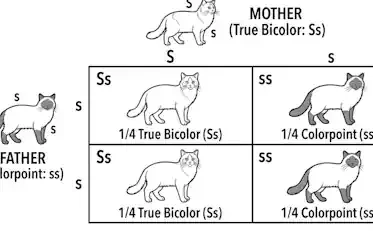
The visual identity of the Ragdoll is a sophisticated manifestation of the Himalayan gene, a form of partial albinism that produces "pointed" coloration. This genetic mechanism is temperature-sensitive, meaning the production of pigment is restricted to the cooler extremities of the body—the face, ears, legs, and tail—while the warmer core remains a lighter shade. This biological quirk creates the striking contrast that defines the breed. However, unlike other pointed breeds, the Ragdoll’s coat is further complicated by the presence of white spotting genes, which dictate the specific distribution of white markings across the body.
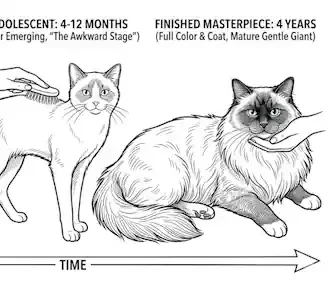
Every Ragdoll is born entirely white, resembling a blank canvas in the warmth of the womb. It is only after birth, as the kitten is exposed to the cooler ambient temperature of the external world, that the enzyme tyrosinase begins to function, slowly depositing color. This is not an overnight transformation; it is a gradual revelation that can take several weeks to begin and up to three or four years to reach its final, saturated depth. For breeders and enthusiasts, this slow maturation requires a high degree of patience, as the true beauty of a Ragdoll's mask and points is a reward for time rather than an immediate feature.
The breed is categorized into four primary colors: seal (a deep, dark brown), blue (a cool, slate gray), chocolate (a warm, milk-chocolate tone), and lilac (a delicate, pinkish-gray). These base colors can also appear in "lynx" patterns, which introduce tabby-like striping to the points, or "tortie" patterns, which blend red or cream mottling into the darker areas. Regardless of the color or pattern, the most non-negotiable requirement of the Ragdoll standard is the eyes. They must be a vivid, distinct blue. This ocular trait is linked to the same genetic complex that governs the pointed coat, ensuring that while the fur may change with age, the piercing blue gaze remains constant.
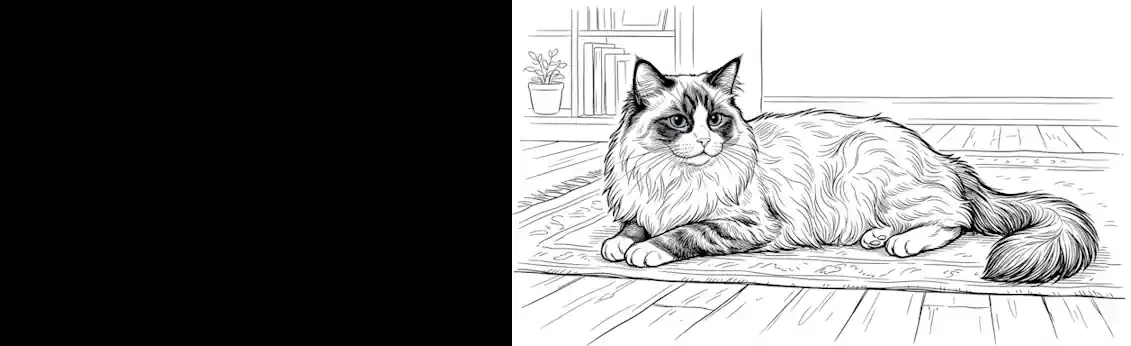
The texture of the Ragdoll coat is equally distinctive, often described as having the consistency of polished silk or rabbit fur. Structurally, it is a semi-longhair coat that lacks a dense, woolly undercoat. This absence of a secondary layer is a critical evolutionary advantage for the indoor owner, as it significantly reduces the propensity for matting and tangling compared to the Persian or Maine Coon. The fur does not "clump" as easily; instead, it flows over the cat’s heavy musculature, highlighting their substantial size. Despite this elegance, the coat is functional and protective, providing a soft barrier that requires only moderate grooming to maintain. Understanding this genetic and structural blueprint is essential for anyone seeking to preserve the health and aesthetic brilliance of the breed.
Recognized Patterns and the Geometry of the Mask
While color defines the hue of a Ragdoll, the pattern dictates the specific distribution of that color against the white canvas of the body. In the competitive world of cat shows and the precise world of breeding, these patterns are not merely aesthetic suggestions but rigid standards that determine a cat's quality. The Ragdoll is primarily recognized in three distinct patterns: Colorpoint, Mitted, and Bicolor. Each of these patterns requires a specific genetic alignment to achieve the symmetry and "balance" that the breed standards demand.
The Colorpoint pattern is the most traditional manifestation of the Himalayan gene. In this variation, the cat possesses no white spotting at all. The face, ears, feet, and tail are deeply pigmented, while the body remains a much lighter, creamy shade. This creates a stark, elegant contrast, with the dark "mask" of the face highlighting the brilliance of the blue eyes. The lack of white markings means the focus is entirely on the quality of the point color and the texture of the fur. However, even within this dark-pointed pattern, the belly and chest are typically a shade or two lighter than the back, a result of the core body heat suppressing pigment production.
The Mitted pattern adds a layer of complexity and is perhaps the most iconic "classic" Ragdoll look. As the name suggests, the cat appears to be wearing white "mittens" on its front paws and white "boots" on its back legs. A mitted Ragdoll must also have a white chin and a white stripe running along the belly, from the chest to the tail. Some mitted cats also possess a "blaze"—a small white star or diamond on the nose or between the eyes. For a mitted cat to be considered show-quality, the white on the legs must be symmetrical; uneven "socks" are viewed as a fault, despite having no impact on the cat’s personality or health.
The Bicolor pattern is the most striking and arguably the most difficult to breed to perfection. A true Bicolor Ragdoll features a distinctive inverted "V" of white on the face, which must be symmetrical and centered, covering the nose and muzzle but not extending past the outer corners of the eyes. The legs, chest, and belly should be entirely white, while the "saddle" on the back may have patches of color. This pattern requires the presence of the dominant white spotting gene, which "masks" the underlying point color. Achieving the perfect "V" is a game of genetic chance; if the white extends too far, the cat is "high mitted," and if it is too narrow, the mask appears cluttered.
Beyond these three, some associations recognize the "Van" pattern, which is an extreme version of the Bicolor where color is restricted almost entirely to the ears and tail. Regardless of the specific pattern, the underlying goal of the breeder remains the same: a harmonious balance between the deep, saturated point color and the pristine white markings. This geometric precision, combined with the cat’s large frame and silky coat, creates a visual impact that is unique to the Ragdoll. For the owner, these patterns are a point of pride and a testament to the decades of selective breeding that transformed a backyard colony into a masterpiece of feline breeding.
Structural Conformation and the Prolonged Growth Cycle
The physical presence of a Ragdoll is one of its most imposing features, characterized by a "substantial" build that places it among the largest domesticated cat breeds. Unlike the lithe, angular frames of the Siamese or the compact, muscular density of the British Shorthair, the Ragdoll is defined by a broad-chested, rectangular silhouette. Their bone structure is heavy and robust, providing a sturdy foundation for their significant mass. Adult males typically weigh between 15 and 20 pounds, with some individuals exceeding these averages, while females generally range from 10 to 15 pounds. This size is not merely a product of weight but of a skeletal frame that is built for durability and power, even if that power is rarely used for anything more strenuous than seeking out a sunbeam.
A critical aspect of Ragdoll physiology that sets them apart from the vast majority of other felines is their exceptionally slow rate of maturation. While most domestic cats reach their full physical size by their first birthday, the Ragdoll exists in a state of "extended adolescence." Their growth is a marathon, not a sprint, typically spanning three to four full years before the cat is considered physically mature. During this time, the skeleton continues to calcify, the chest broadens, and the muscle tone becomes more defined. Owners often observe "growth spurts" where the cat may appear temporarily disproportionate—with legs that seem too long for the body or a head that has yet to catch up to the width of the shoulders—before the frame finally harmonizes in adulthood.
One unique anatomical feature of the breed is the "primordial pouch" or "fat pad" located on the lower abdomen. While in many breeds this is viewed as a sign of obesity, in the Ragdoll, a degree of looseness in this area is a recognized breed characteristic. This pouch provides the cat with greater flexibility for stretching and jumping, though in the sedentary Ragdoll, it more often serves as a soft cushion when they assume their favorite belly-up sleeping position. However, this trait requires careful monitoring; because the Ragdoll is naturally heavy-boned and possesses this abdominal flap, it can be difficult for an untrained eye to distinguish between a healthy, substantial cat and one that is becoming clinically overweight.
The head of the Ragdoll is a broad, modified wedge, featuring a flat plane between the ears and a well-developed chin that aligns vertically with the nose. This "sweet" facial expression is a byproduct of their rounded muzzle and slightly tilted, large blue eyes. Their ears are medium-sized and set wide apart, continuing the line of the wedge and tilting slightly forward, as if always tuned into the movements of their human companions. This combination of a powerful, heavy body and a soft, expressive face creates a striking physical duality. The Ragdoll is a gentle giant, a cat that possesses the physical stature of a predator but the structural and psychological makeup of a devoted companion. Sustaining this massive frame requires a diet rich in high-quality proteins and nutrients, specifically tailored to support bone health and muscle maintenance throughout their four-year developmental journey.
The Psychological Profile and the "Puppy-Cat" Phenomenon
The defining characteristic of the Ragdoll, far outweighing its physical size or coat pattern, is its unique psychological makeup. In a species known for its independence and occasional aloofness, the Ragdoll is a profound outlier. They are famously dubbed "puppy-cats," a term that describes their dog-like devotion to their human partners. While a typical cat might acknowledge a person's return with a twitch of an ear from across the room, a Ragdoll is likely to meet its owner at the door, follow them from room to room, and insist on being involved in whatever activity is taking place, whether it is reading, cooking, or sleeping.
This intense social orientation is rooted in a temperament that has been selectively bred to minimize aggression and maximize trust. The Ragdoll lacks the sharp, reactive edges found in more primitive or high-energy breeds. They are notoriously non-confrontational; if a Ragdoll is bothered by a loud noise or an over-eager toddler, its primary instinct is to retreat calmly or simply "flop" rather than hiss or scratch. This "limp" reflex, where the cat’s muscle tone seemingly evaporates when it is lifted, is the ultimate physical expression of this psychological surrender. It is not a sign of physical weakness, but a manifestation of total environmental security.
However, this lack of defensive instinct presents a significant responsibility for the owner. Because the Ragdoll has had much of its "environmental suspicion" bred out of its lineage, they are ill-equipped for the dangers of the outside world. A Ragdoll does not possess the street-smart caution required to navigate traffic, avoid predators, or defend itself against aggressive stray animals. They are inherently vulnerable creatures who assume the world is as gentle as they are. Consequently, keeping a Ragdoll strictly indoors is not merely a preference but a safety mandate. Their "hunting" instincts are similarly dampened; while they may chase a laser pointer or a feather toy with enthusiasm, they rarely exhibit the intense, predatory "kill-drive" seen in other hunters.
Intellectually, Ragdolls are highly capable and responsive to positive reinforcement. They can be taught to fetch, walk on a lead, and respond to verbal commands, provided the training is framed as a social interaction rather than a chore. Their motivation is almost entirely based on human attention; they perform tasks because it pleases their partner, not necessarily because they are driven by the task itself. This emotional intelligence makes them highly sensitive to the mood of the household. They are known to offer quiet companionship during times of stress, often positioning themselves nearby as a silent, supportive presence. This synergy between their massive physical frame and their delicate, empathetic nature is what makes the Ragdoll partnership a truly singular experience in the feline world.
Health Surveillance and Hereditary Considerations
The robust physical appearance of the Ragdoll can be deceptive, as the breed’s large frame and heavy bone structure require proactive veterinary management. While they are generally long-lived, reaching between 12 and 15 years on average, their genetic history introduces specific vulnerabilities that every owner must understand. Because the breed was established from a limited gene pool in the 1960s, certain hereditary conditions have persisted within the lineage, making diagnostic screening a cornerstone of responsible ownership.
The most critical health concern for the Ragdoll is Hypertrophic Cardiomyopathy (HCM), the most common form of heart disease in felines. In Ragdolls, this condition is often the result of a specific genetic mutation that causes the walls of the heart to thicken, eventually leading to heart failure or sudden lethargy. Historically, this was a silent killer, but modern science has identified the $MYBPC3$ gene mutation responsible for the condition in this breed. Reputable breeders now utilize DNA testing to ensure that their breeding pairs are "clear" of this mutation. For owners, ensuring their cat comes from DNA-tested lineage is the most effective way to mitigate this risk, though annual echocardiograms remain the gold standard for monitoring cardiac health as the cat matures.
Another area of concern is renal health, specifically Polycystic Kidney Disease (PKD). Although more commonly associated with Persians, the Ragdoll’s early cross-breeding with long-haired cats of unknown origin introduced a susceptibility to kidney cysts. These cysts are present from birth and slowly enlarge over time, eventually compromising kidney function. Like HCM, PKD can be identified early through DNA testing or ultrasound. Additionally, Ragdolls can be prone to the formation of calcium oxalate stones in the bladder. This is often exacerbated by the breed's naturally low thirst drive and sedentary lifestyle. Maintaining a diet with high moisture content—prioritizing quality wet food over dry kibble—is essential for flushing the renal system and preventing painful urinary blockages.
Finally, the Ragdoll’s slow metabolism and lack of high-intensity activity make obesity a constant threat. Carrying excess weight puts undue stress on their large joints and can lead to secondary issues such as feline diabetes or hepatic lipidosis. Because their "primordial pouch" can mask the early stages of weight gain, owners should rely on the "rib test"—being able to feel the ribs without a thick layer of fat—rather than visual cues alone. By combining genetic vigilance with strict nutritional management and regular veterinary check-ups, the Ragdoll can maintain its vitality well into its senior years, ensuring that its physical health matches its enduringly youthful spirit.
Grooming Dynamics and Maintenance of the Silky Coat
The aesthetic appeal of the Ragdoll is undeniably centered on its plush, rabbit-like fur, but the maintenance of this coat is often misunderstood. Unlike other long-haired breeds, such as the Persian or the Maine Coon, the Ragdoll possesses a "single-layered" coat. This means they lack the dense, woolly undercoat that is typically responsible for the severe matting and "felting" seen in other felines. This structural advantage makes the Ragdoll a medium-maintenance breed rather than a high-maintenance one, though it does not absolve the owner of regular grooming responsibilities.
The primary goal of grooming a Ragdoll is the removal of dead hair and the stimulation of skin oils. Because their fur is so silky, it has a tendency to shed in "clumps" or "drifts" rather than individual strands. A thorough combing at least twice a week is the standard requirement. Using a high-quality steel comb is preferable to a brush, as it can reach down to the skin to ensure no small tangles are forming in high-friction areas, such as under the armpits (the "armpit mats"), behind the ears, and around the "britches" on the hind legs. During the seasonal shedding periods in spring and fall, this frequency should increase to daily sessions to manage the sheer volume of fur being replaced as the cat adjusts to changing temperatures.
A secondary but vital benefit of regular grooming is the prevention of hairballs. Because Ragdolls are fastidious self-groomers and possess a significant surface area of fur, they can ingest a large amount of loose hair. Given their large size and sometimes slower digestive tracts, frequent hairballs can lead to intestinal blockages. By removing the dead hair manually, the owner significantly reduces the biological load on the cat’s digestive system. Additionally, because the Ragdoll is so docile, most individuals view the grooming process as a form of social bonding rather than a stressful chore, often purring or "flopping" into position as soon as they see the comb.
Bathing is rarely a necessity for an indoor Ragdoll, but it can be beneficial for maintaining the pristine white areas of a Bicolor or Mitted pattern, especially as the cat ages and may become less thorough in its own cleaning. If a bath is required, it is essential to use a degreasing shampoo specifically formulated for cats to protect the natural pH of their skin. Beyond the coat, the grooming routine must include regular nail trimming and dental care. Because Ragdolls are not active hunters, their claws do not wear down naturally and can become snagged in carpets or upholstery. Similarly, their predisposition to certain dental issues means that starting a tooth-brushing routine in kittenhood is a wise investment in their long-term systemic health. This holistic approach to grooming ensures the Ragdoll remains as comfortable as it is beautiful.
Dietary Strategy and Metabolic Management
The nutritional management of a Ragdoll is a delicate balancing act between supporting their massive skeletal growth and preventing the onset of obesity. Because their developmental window remains open for up to four years, their caloric and protein requirements differ significantly from the average domestic cat. During the first few years, a diet rich in high-quality animal proteins and essential fatty acids—such as DHA and EPA—is critical for ensuring proper bone density and the development of their signature silky coat. However, as the Ragdoll reaches maturity and their activity levels naturally plateau, the risk of metabolic slowdown becomes a primary concern for the owner.
The breed is notoriously sedentary, often preferring a horizontal lifestyle that involves moving from one resting spot to another rather than engaging in high-energy play. This low energy expenditure, combined with their large appetites, makes them highly susceptible to weight gain. Obesity in a Ragdoll is particularly dangerous because it can exacerbate hereditary heart conditions and put undue stress on their heavy joints. To manage this, "free-feeding" or leaving a bowl of dry kibble out at all times is generally discouraged. Instead, scheduled, portion-controlled meals are the standard for maintaining a healthy silhouette. Owners must be disciplined, resisting the "begging" behaviors that these social cats often use to solicit extra treats.
Hydration is the second pillar of Ragdoll nutrition. Like many felines, Ragdolls have a low thirst drive and may not consume enough water from a bowl to maintain optimal renal health. Given their predisposition to bladder stones and kidney issues, a diet consisting primarily of high-quality wet food is highly recommended. Wet food provides the necessary moisture to flush the urinary tract and kidneys, reducing the concentration of minerals that lead to stone formation. For cats that are resistant to wet food, a circulating water fountain can often entice them to drink more by appealing to their natural preference for moving water.
Finally, the inclusion of specific fibers or specialized "hairball control" diets may be necessary, especially for cats with particularly plush coats. While regular grooming is the first line of defense, a diet that aids in the smooth passage of ingested fur through the digestive tract can prevent the discomfort of chronic hairballs. It is also beneficial to avoid fillers such as corn, wheat, or soy, which provide empty calories without the amino acid profile necessary for a cat of this size. By viewing food as a functional tool for health rather than just a source of satiety, the Ragdoll owner can ensure their "gentle giant" remains lean, mobile, and vibrant throughout its long life.
Integration and Multi-Pet Household Dynamics
The Ragdoll’s psychological adaptability makes it one of the most successful breeds for integration into diverse domestic environments. Unlike many felines that view a new addition to the home as a territorial threat, the Ragdoll’s baseline is one of curious neutrality. They do not possess the high-strung, territorial anxiety that characterizes more primitive breeds. When introduced to a household that already contains other animals, the Ragdoll’s non-confrontational nature allows for a smoother transition, as they rarely "challenge the hierarchy," preferring instead to find a comfortable peripheral spot until they are accepted.
In households with dogs, the Ragdoll often forms a unique, interspecies bond. Because they lack the "flight" instinct that triggers a dog’s predatory chase drive, they are less likely to be perceived as prey. A Ragdoll is more likely to sit its ground and sniff a curious canine than to bolt, a behavior that often results in a calm, respectful coexistence. Many owners report their Ragdolls and dogs sharing sleeping quarters or engaging in gentle grooming sessions. However, the responsibility lies with the owner to ensure that the canine companion is equally well-mannered, as a Ragdoll will not always defend itself if the play becomes too rough.
When it comes to living with other cats, the Ragdoll functions as a stabilizing force. They are not "alpha" seekers; they are "peace" seekers. In a multi-cat dynamic, the Ragdoll often occupies the role of the mediator, simply by virtue of its refusal to engage in power struggles. While they enjoy the company of other felines, they are equally content as the sole object of their owner's affection. If a second cat is introduced, the Ragdoll typically approaches with a "slow blink" and a relaxed posture, signaling that it poses no threat to the existing social order.
For families with children, the Ragdoll is frequently the ideal choice. Their high threshold for handling and their "floppy" response to being carried make them remarkably patient with the clumsy affection of toddlers. They are known to endure being dressed in doll clothes or pushed in strollers with a level of stoicism that would be impossible for most other breeds. Nevertheless, adult supervision is paramount to protect the cat. Because the Ragdoll may not vocalize its discomfort or use its claws to set boundaries, it is easy for a child to unknowingly overstep. The goal of a multi-pet or child-filled household should always be to mirror the Ragdoll’s own gentleness, creating a sanctuary where its profound trust is never exploited.
Environmental Enrichment and the "Indoor-Only" Mandate
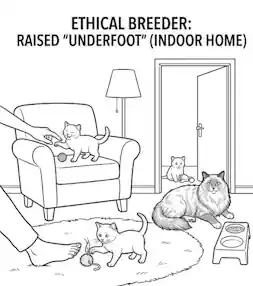
The physical safety of a Ragdoll is entirely dependent on its environment. Because the breed has been selectively refined for a lack of aggression and a dampened "fight or flight" reflex, they are functionally defenseless against the hazards of the natural world. Most reputable breeders include a mandatory "indoor-only" clause in their contracts, recognizing that a Ragdoll lacks the predatory suspicion required to survive traffic, territorial disputes with stray animals, or the threat of local wildlife. To a Ragdoll, every stranger is a friend and every moving vehicle is a curiosity rather than a danger.
Creating a stimulating indoor environment is therefore essential to prevent lethargy and cognitive decline. While they are not high-altitude jumpers like the Abyssinian, Ragdolls still require vertical space to survey their "territory." However, due to their heavy frames and sometimes clumsy landings, environmental enrichment should focus on sturdy, low-to-mid-level perches rather than ceiling-high shelving. Sturdy scratching posts are a necessity to support their significant weight during a stretch, and interactive toys that mimic the movement of birds or insects can help maintain their muscle tone without overtaxing their joints.
For owners who wish to provide their Ragdoll with a taste of the outdoors, a "catio" or a secure, screened-in porch offers the ideal compromise. This allows the cat to experience the sensory stimulation of fresh air and bird-watching without the risks of wandering. Additionally, many Ragdolls can be successfully trained to walk on a harness and leash, provided they are introduced to the equipment gradually and within a controlled environment. This social interaction provides the mental complexity they crave while keeping them firmly under the protection of their human partner.
Ultimately, the Ragdoll’s environment should be a reflection of its personality: calm, predictable, and deeply integrated with the life of the home. They do not do well in isolation; a Ragdoll left alone in a basement or a spare room will quickly become depressed and withdrawn. They thrive when they are at the center of the household's "traffic," where they can observe and participate in the daily rhythms of their family. By providing a safe, enriched, and socially active indoor world, the owner ensures that the Ragdoll’s profound trust in its surroundings remains justified.
The Enduring Legacy of the Gentle Giant
The Ragdoll occupies a singular space in the feline world, representing a bridge between the wild, independent nature of the traditional cat and the devoted, social temperament of a companion dog. From its beginnings as a localized curiosity in 1960s California to its current status as a globally recognized and beloved breed, the Ragdoll has proven that there is a profound appetite for a pet that offers total vulnerability and trust. Its physical grandeur—the striking blue eyes, the massive, heavy-boned frame, and the silk-textured coat—is merely the outward expression of a psychological blueprint designed for harmony and affection.
Understanding the Ragdoll requires a commitment to its unique biology and history. It is a breed that demands patience, as its physical and color development unfolds over a multi-year journey. It requires vigilance, as its lack of defensive instincts and genetic predispositions necessitate a protected, indoor lifestyle and proactive healthcare. Yet, for the owner who is willing to provide this level of stewardship, the rewards are unparalleled. The Ragdoll does not just live in a home; it participates in it, offering a level of presence and empathy that transforms the bond between human and animal into a true partnership.
As we look to the future of the breed, the emphasis remains on the preservation of its foundational traits: health, size, and, most importantly, temperament. By adhering to rigorous breeding standards and prioritizing genetic transparency, enthusiasts ensure that the "gentle giant" remains a pillar of stability and joy in the domestic landscape. Whether as a silent companion for a single owner or a patient playmate in a bustling family home, the Ragdoll remains a masterpiece of selective breeding and a living testament to the beauty of trust.
Frequently Asked Questions About Ragdoll Cats
How did the Ragdoll cat get its name?
The breed was named for its iconic habit of relaxing all its muscles and going limp when picked up, much like a child's ragdoll. This trait is a hallmark of their unique, trusting temperament.
Are all Ragdolls born white?
Yes. Because they carry a temperature-sensitive form of albinism, kittens are born pure white in the warmth of the mother's womb. Their "point" colors (on the face, ears, tail, and paws) only begin to develop once they are exposed to the cooler external environment.
Do Ragdoll cats shed a lot?
While they are long-haired, they lack a dense, woolly undercoat, which makes them shed less than breeds like the Persian. However, they are not hypoallergenic; they still shed seasonally and require brushing at least twice a week to manage loose fur.
Are Ragdolls good with children and other pets?
They are widely considered one of the best breeds for families. Their high tolerance for being handled and their non-aggressive nature allow them to integrate seamlessly with respectful children, dogs, and other cats.
Why must Ragdolls stay indoors?
Selective breeding has largely removed their defensive instincts. A Ragdoll is unlikely to defend itself against a predator or recognize the danger of a moving vehicle, making a strictly indoor environment or a secure "catio" essential for their survival.
How big do Ragdoll cats actually get?
They are one of the largest domestic cat breeds. Adult males typically weigh between 15 and 20 pounds, while females range from 10 to 15 pounds. Their heavy bone structure and slow maturation mean they don't reach their full size until they are 3 or 4 years old.
What is the "floppy cat" reflex?
It is a psychological and physical response where the cat feels so secure that it yields its entire body weight to the person holding it. While charming, it also means they are less agile than other cats and can be injured more easily if dropped.
Do they have specific health problems?
The primary concern is Hypertrophic Cardiomyopathy (HCM), a hereditary heart condition. Responsible owners should ensure their cat’s parents have been DNA-tested for the $MYBPC3$ gene mutation to reduce the risk of this disease.
Are Ragdolls vocal or loud?
Generally, no. They are known for being relatively quiet, communicating in soft, melodic chirps and trills rather than demanding meows. This makes them excellent companions for apartment living.
Do Ragdolls require a special diet?
Because of their large frames and low activity levels, they are prone to obesity. A high-protein, portion-controlled diet is necessary. Many breeders recommend wet food to ensure proper hydration, which helps prevent bladder stones and kidney issues.