Chapter 2: Living in the Feline Orbit
This is an excerpt from Chapter 2 from my book. I am posting the full book free to users of this site here.
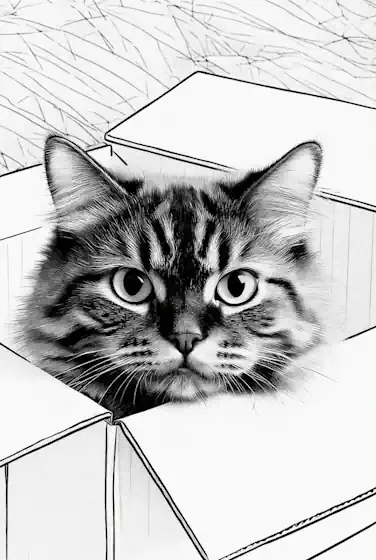
The Realization That One Does Not "Own" A Cat
I am sitting here with a lukewarm coffee and thinking about how I ended up in this specific predicament. It started with a small cardboard box and a very loud squeak, and a complete misunderstanding of how power dynamics work in a domestic setting. I thought I was making a conscious choice to bring a companion into my home, but I see now I was merely being processed by a very tiny and very furry HR department. Most people think they adopt a cat to have a pet or a companion or a mouse-catcher, but the reality is much more like a high-stakes corporate takeover where you are the company being bought out for parts.
Barnaby arrived with the confidence of a seasoned CEO and the appetite of a wood chipper, and the general social grace of a damp sock. He walked into the living room, sniffed the air, and decided that the expensive wool rug belonged to him now. Hard to tell. I stood there holding a bag of premium kibble and a sense of misplaced authority while he just stared at my shins with a look that suggested I was already slightly behind on my paperwork. It is a very strange thing to realize that your primary function in life has shifted overnight from "independent adult" to "essential can-opening infrastructure".
I had read the books about feline behavior, and I had watched the documentaries, and I had even bought a very sturdy scratching post that looked like a modern art installation. None of those things prepared me for the internship period. This is the stage where the cat spends several weeks evaluating your reaction times and your willingness to share your toast and your overall threshold for being woken up by a wet nose at three in the morning. It is a quiet and methodical, and deeply humbling process. I remember trying to set boundaries about the kitchen counter only to find him sitting next to the toaster five minutes later with an expression of profound boredom. He wasn't even looking for crumbs; he was just demonstrating that my rules were merely suggestions written in a language he had no intention of learning.
The internship never really ends because the cat is always finding new ways to test your performance. Last week, I was thirty seconds late with the evening meal, and the look of betrayal was so thick I felt I should perhaps offer a written apology or a promotion or a very expensive tuna steak. We like to think we are the masters of our domain, but we are really just the junior associates in a firm where the senior partner spends twenty hours a day napping in a sunbeam. It is a lovely sort of trap. I find myself apologizing to him when I accidentally sit on my own sofa, and I suspect that is exactly how he planned it from the moment he stepped out of that box.
Art of Furniture Colonization
I have been thinking a lot lately about the physics of feline displacement and how a creature the size of a loaf of bread can effectively annex an entire king-sized mattress. It is a mystery of the natural world and a defiance of geometry, and a very rude awakening for my lower back. Barnaby has this way of stretching out that seems to involve adding extra limbs or perhaps just expanding his molecular density until there is no room left for a human adult with bills to pay. I usually start the night with a reasonable amount of territory, but by two in the morning, I am clinging to the very edge of the bed like a survivor on a lifeboat.
The colonisation process is subtle and methodical and entirely relentless. He begins at the foot of the bed and slowly migrates toward the center until he has established a strategic base of operations right where my legs are supposed to go. Hard to tell how he does it without me noticing. I find myself waking up in a shape that suggests I am auditioning for a role as a human pretzel or perhaps a very distressed letter S. There is a specific kind of guilt that comes with trying to reclaim your own sleeping space from a sleeping cat. You look at the soft rise and fall of their fur and the twitching whiskers and the tiny paws, and you realize that your comfort is a very small price to pay for their absolute peace.
It isn't just the bed, though. The living room is also a battlefield of soft furnishings and stolen spots. I bought a very expensive leather armchair that I thought would be my sanctuary for reading and drinking tea, and ignoring the world. Barnaby, however, decided it was his new lookout post and his scratching playground and his preferred place for afternoon naps. I now sit on a small wooden stool in the corner while he sprawls across the leather like a tiny furry king. It is a very strange feeling to be a guest in your own home, but I suppose it keeps me humble and keeps me limber and keeps me focused on the floor.
There is no point in arguing with a cat about furniture because they have a much higher endurance for staring contests. I tried to move him once, and he just went limp and heavy and strangely liquid like I was trying to pick up a sack of very sleepy pudding. He didn't even wake up. He just let out a tiny sigh that sounded suspiciously like a critique of my lifting technique. I gave up and went back to my stool. I think he knows exactly what he is doing, and I think he finds my struggle quite entertaining in a distant sort of way. Hard to tell.
This is an excerpt from Chapter 2 from the book. I am posting the full book free to users of this site here.