Defining the Preservation Breeder, The Mission Beyond Profit
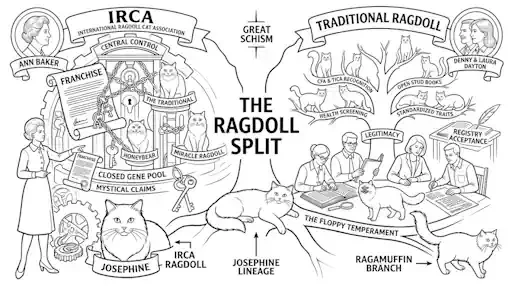
When beginning the search for a Ragdoll companion, the most critical distinction a prospective owner can make is between a "kitten producer" and a "preservation breeder." While both may offer cats that look like Ragdolls, their motivations and methods exist on opposite ends of the ethical spectrum. A preservation breeder is a guardian of the breed’s future. Their primary mission is not to supply a retail market, but to maintain and protect the specific physical standards, genetic health, and legendary temperament that Ann Baker and the Daytons first codified. For these breeders, every litter is a carefully calculated attempt to produce the next generation of excellence, with "pet quality" kittens being the byproduct of a quest for "show quality" perfection.
The first hallmark of an ethical preservation breeder is active participation in the larger cat fancy through recognized registries such as the Cat Fanciers' Association (CFA), The International Cat Association (TICA), or specialized groups like the Ragdoll Fanciers' Club International (RFCI). These affiliations are not merely memberships; they represent a commitment to third-party accountability. By registering their cats and litters, breeders create a transparent, traceable pedigree that ensures the kitten is a purebred Ragdoll and not a "lookalike" with unknown genetic heritage. Furthermore, a preservation breeder actively "shows" their cats. While some buyers view cat shows as a hobby for the elite, they are actually the only objective way to verify that a breeder is adhering to the breed standard. A judge’s ribbon is a validation that the cat possesses the correct "heaviness," coat texture, and docile nature that defines the breed.
Furthermore, a preservation breeder operates with a level of transparency that profit-driven "backyard breeders" simply cannot match. They are often deeply involved in the community, staying updated on the latest feline health research and genetic breakthroughs. Their goal is to improve the breed with each generation, which means they are highly selective about which cats they choose to mate. This selectivity often results in a waiting list. Unlike a commercial operation that always has kittens "in stock," a preservation breeder typically has only one or two litters a year. They prioritize the health of the queen and the socialization of the kittens over high-volume sales.
Choosing to source from a preservation breeder is an investment in the long-term health and stability of your pet. By supporting those who view the Ragdoll as a biological masterpiece rather than a commodity, you are helping to ensure that the "Gentle Giant" continues to thrive for decades to come. These breeders act as the ultimate gatekeepers, standing against the dilution of the breed's traits and the introduction of preventable genetic diseases. When you buy from a preservationist, you aren't just buying a cat; you are becoming part of a legacy of care and commitment that stretches back to the very foundations of the breed in Riverside.
The Red Flags of the "Backyard Breeder"
Distinguishing an ethical operation from a "backyard breeder" requires looking past a cute photo and examining the business model. A backyard breeder is typically motivated by profit rather than breed preservation. One of the most common traps for the unsuspecting buyer is the "always available" kitten. Because an ethical breeder prioritizes the health of their queens and the careful selection of mates, they rarely have a constant surplus. If a website or social media page consistently lists multiple litters available for immediate pickup, it is a strong indicator of a high-volume "kitten mill" environment where the cats are treated as livestock rather than family members.
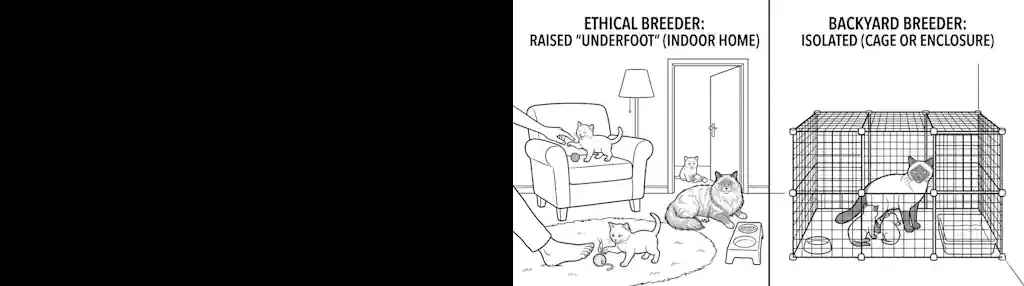
Another major red flag is a lack of transparency regarding the breeding environment. Reputable breeders raise their kittens "underfoot," meaning the cats are integrated into the daily life of a home to ensure they are well-socialized and accustomed to human contact. A breeder who refuses to show you the premises, or insists on meeting you in a parking lot or a neutral location, is likely hiding substandard living conditions, such as outdoor cages or overcrowded, unsanitary "cattery" rooms. This lack of early socialization is devastating for a Ragdoll; if the "floppy" temperament isn't nurtured in the first twelve weeks, you may end up with a fearful or skittish cat that does not fit the breed’s profile.
Furthermore, beware of the "discount" Ragdoll. Preservation breeding is expensive, involving high-quality nutrition, multiple DNA tests, and specialized veterinary care. A breeder offering kittens at a significantly lower price point than the regional average is almost certainly cutting corners on health screenings or vaccinations. While the initial purchase price might be lower, the long-term "hidden" costs of a backyard-bred cat, such as treating undetected parasites, congenital heart issues, or severe behavioral problems, can easily run into the thousands of dollars.
Finally, a backyard breeder often fails to provide a formal contract or a "right of return" clause. An ethical breeder is committed to the cat for its entire life; they will insist that if you can ever no longer care for the animal, it must be returned to them. A breeder who hands over a kitten for cash without a signed agreement for spaying/neutering and a health guarantee is effectively "washing their hands" of the animal the moment the transaction is complete. This lack of accountability is the clearest sign that you are dealing with a commercial seller rather than a dedicated guardian of the Ragdoll breed.
The Genetic Health Checklist, Demanding Documentation
In the modern era, "looking healthy" is not enough. Because the Ragdoll is a pedigreed breed with a specific genetic history, they are susceptible to certain hereditary conditions that can only be detected through molecular testing. An ethical breeder will not only tell you their cats are healthy but will also provide printed or digital proof of DNA results for the parent cats. The most critical test on your checklist is for Hypertrophic Cardiomyopathy (HCM), specifically the MYBPC3 mutation. This is a dominant trait, meaning even one copy of the gene significantly increases the risk of early-onset heart failure. You must ensure both parents are "HCM Clear" before committing to a kitten.
In addition to HCM, you should ask for proof of screening for Polycystic Kidney Disease (PKD). While less common in Ragdolls than in Persians, it remains a risk in long-haired breeds. A preservation breeder will also be able to discuss the Feline Leukemia Virus (FeLV) and Feline Immunodeficiency Virus (FIV) status of their cattery. These are highly contagious and devastating diseases, and a reputable breeder maintains a "closed" cattery to prevent their introduction. If a breeder seems confused by these terms or claims that "their lines are fine" without showing you a lab report, it is a signal to end the conversation immediately.
Beyond DNA, you should inquire about the broader veterinary history of the breeding pair. This includes regular echocardiograms for the heart and general wellness certifications. A breeder who invested in the health of the parents is a breeder who cares about the longevity of the kittens. When you ask for these documents, a reputable breeder will be proud to show them to you; they view a knowledgeable buyer as a partner in the breed's success. Remember, a "health certificate" from a vet is just a snapshot of the kitten’s current state; a genetic health guarantee is a promise about the kitten’s future.
Temperament, The Living Pedigree
While DNA tests and registration papers provide the structural blueprint of a Ragdoll, the soul of the breed is found in its temperament. A preservation breeder understands that a Ragdoll who isn't "floppy" is simply a long-haired cat with a mask. Because the docile nature of this breed is a combination of genetic inheritance and early environmental conditioning, meeting the parent cats, specifically the mother, is a non-negotiable step in the sourcing process. The queen's behavior during nursing and weaning serves as the primary model for her kittens. If the mother is skittish, aggressive, or wary of humans, her kittens are highly likely to mirror those survival instincts, regardless of their pedigree.
When visiting a breeder, observe how the adult cats interact with you and the breeder. Do they approach with a soft, vertical tail? Do they allow themselves to be lifted without tension? This "living pedigree" is the only way to verify that the breeder is successfully selecting for the signature Ragdoll disposition. Furthermore, inquire deeply about the breeder's socialization protocols. Ethical breeders raise their kittens "underfoot," exposing them to the sights and sounds of a functioning home, vacuum cleaners, television, and various guests, starting as early as three weeks old. This period is the "critical window" where a kitten’s brain is most plastic. If a kitten is isolated in a cage or a separate "cattery building" during these formative weeks, it may never develop the total, boneless trust that owners expect from the breed.
A significant marker of an ethical breeder’s commitment to temperament is the "12-week rule." You should be wary of any breeder willing to let a kitten go at eight or nine weeks. While a kitten may be physically weaned by then, the weeks between eight and twelve are the most vital for social learning. During this time, kittens learn "bite inhibition" from their siblings and receive essential emotional regulation from their mother. A Ragdoll removed too early is often prone to anxiety and behavioral issues. By insisting on a 14-week stay, a preservation breeder ensures that the kitten is not just a healthy animal, but a socially mature companion ready to transition into your home without trauma.
Finally, trust your intuition during these interactions. A reputable breeder will spend as much time "interviewing" you as you spend interviewing them. They want to ensure their life’s work is going to a home that understands the needs of a social, indoor-only giant. If a breeder seems more interested in your credit card than your living situation, they are likely not prioritizing the temperament of their cats. The goal is to find a partner in your cat's life journey, someone who has nurtured the kitten's spirit as carefully as they have managed its genetic health.
The Ethical Contract and Life-Long Accountability
The final and perhaps most telling marker of an ethical breeder is the contract they require you to sign. A preservation breeder does not view the placement of a kitten as a simple financial transaction; they view it as a lifelong commitment to the cat's welfare. An ethical contract is a legally binding document that protects the kitten, the buyer, and the breeder. The most prominent feature of such a contract is the mandatory spay/neuter clause. Because reputable breeders are dedicated to protecting the integrity of the Ragdoll gene pool, kittens sold as pet quality are required to be altered. This prevents accidental or irresponsible breeding that could dilute the breed's standards or contribute to the overpopulation of unwanted animals.
Beyond the alteration requirement, a truly ethical contract includes a Right of Return clause. This is the ultimate safety net for the animal. Life is unpredictable, and situations such as illness, financial hardship, or major life changes can sometimes make it impossible for an owner to keep their pet. A preservation breeder will explicitly state that if you can ever no longer care for the cat, at any point in its life, it must be returned to them. They take full responsibility for finding the cat a new, screened home or keeping it themselves. If a breeder tells you to just take it to a shelter if things do not work out, you are dealing with a backyard breeder who has no emotional or ethical investment in the animal’s future.
Furthermore, the contract should outline a clear and comprehensive health guarantee. This is distinct from a basic veterinary certificate of health, which only confirms the kitten is healthy on the day of the sale. A genetic health guarantee should cover hereditary conditions like HCM and PKD for a period of at least two to five years. If a kitten develops a documented genetic issue within that timeframe, the breeder should offer a clearly defined remedy, such as a refund or a replacement kitten. This guarantee is the breeder’s skin in the game, it proves they have done the necessary DNA testing on the parents and are confident in the biological foundation of their lines.
Finally, the relationship with a preservation breeder does not end when you leave with your kitten. They should remain a resource for you, offering advice on nutrition, grooming, and behavior as the cat matures. They are often eager to receive updates and photos, as each kitten’s development provides them with valuable data for their future breeding plans. By signing an ethical contract, you are not just agreeing to a set of rules; you are entering into a partnership with a dedicated professional who is as invested in your cat’s long-term happiness as you are. This accountability is what ensures the Ragdoll remains the healthy, affectionate, and magnificent companion it was always meant to be.
The Essential Ethical Sourcing Checklist
Registry Proof: Always confirm the breeder is an active member of the CFA, TICA, or RFCI to ensure the kitten is a genuine pedigreed Ragdoll with a traceable lineage.
DNA Documentation: Do not take a breeder's word for it; ask to see the printed lab results confirming both parents are Clear of the MYBPC3 mutation for HCM.
The 12 to 14 Week Rule: Ensure the breeder keeps kittens until at least 12 weeks of age to allow for proper physical weaning and critical social learning from the mother.
Raised Underfoot: Verify that kittens are raised as part of the household rather than in isolated cages, ensuring they develop the signature "floppy" and trusting temperament.
Life-Long Responsibility: Ensure the contract includes a mandatory return clause, proving the breeder will take the cat back at any age if you can no longer care for it.
Frequently Asked Questions: Ethical Sourcing and Breeding Standards
What is the difference between a registered kitten and a "purebred" kitten?
A registered kitten comes with official paperwork from an organization like the CFA or TICA, proving its lineage and that its parents meet breed standards. A "purebred" kitten without papers has no verifiable history; you are essentially taking the seller's word that the cat is a Ragdoll and not a lookalike with potential health or temperament issues.
Why does a reputable breeder wait until 12 or 14 weeks to let a kitten go?
While kittens are physically weaned by 8 weeks, the final month with the mother and siblings is the most critical for emotional and social development. During this time, they learn "cat language," bite inhibition, and gain the confidence needed to transition to a new home without becoming anxious or fearful.
If the parents are healthy, do I still need to see DNA results?
Yes. Many genetic conditions, specifically the MYBPC3 mutation for HCM, are "silent." A cat can appear perfectly healthy for years while carrying the gene, only to suffer sudden heart failure later in life. DNA testing is the only way to ensure these hidden killers aren't being passed to your kitten.
Is it okay if I can't meet the father (the sire)?
It is very common for small preservation breeders to "outcross" to a male owned by another breeder to ensure genetic diversity. While you should always be able to meet the mother (the dam) and see the environment where the kittens are raised, not seeing the father in person is normal, provided the breeder has his full health records and pedigree.
Why do I have to sign a contract promising to spay or neuter my pet?
Ethical breeders work hard to preserve the quality of the breed. By requiring pets to be altered, they ensure that only the very best "show quality" cats are used for breeding, preventing "backyard" operations that might accidentally produce unhealthy or off-standard kittens.
Should I be worried if there is a waiting list?
On the contrary, a waiting list is a sign of a responsible breeder. High-quality preservation breeders only have a few litters a year to ensure each kitten gets individual attention and health care. A breeder who always has kittens "ready to go" is often over-breeding their cats for profit.